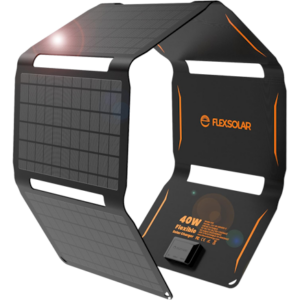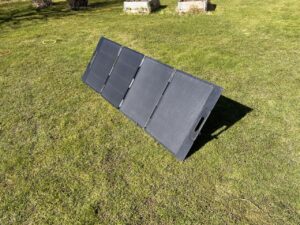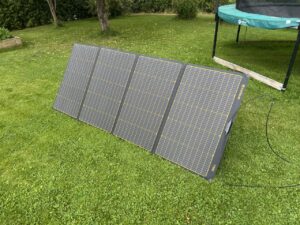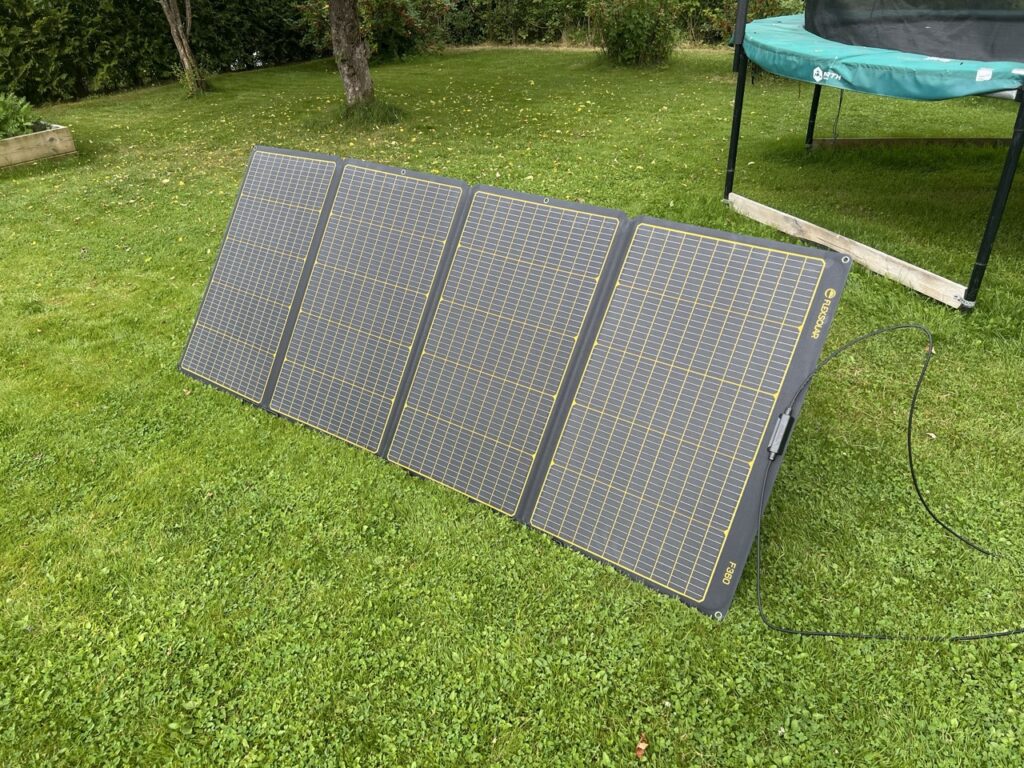
After about one month with the FlexSolar F360, my opinion is already fairly clear: if I have room in the car, this is the solar panel I want to bring.
I have used it for around five to six days of camping across two different locations, after first doing a smaller test at home. My main job for it has been very specific. I wanted it to charge my BLUETTI AC180 while that power station ran a Starlink Mini and compressor cooler 24/7.
In that role, the F360 has been excellent.
The AC180 was usually down to around 50 to 60% in the morning. With direct sunlight, the F360 had no problem bringing it back to 100% in about two to three hours, even while the Starlink Mini and cooler stayed connected.
That charging speed changed how I managed power at camp. With my smaller BLUETTI MP200, I was more aware of what I was consuming. With the F360, I felt like I could spend a little power instead of constantly trying to conserve it.
The tradeoff is obvious. This is a large 14.5 kg folding panel, and it takes up meaningful space. I would not use it for hiking, and I would not bring it if my power needs were small. But for car camping with an AC180, a cooler, and Starlink running continuously, it has been a very strong fit.
Quick verdict
If you want the short version, this is where I land after the first month:
- I have used the F360 for about five to six camping days across two locations
- Its main job has been charging a BLUETTI AC180 running a Starlink Mini and compressor cooler 24/7
- The AC180 was normally at around 50 to 60% in the morning
- In direct sunlight, the F360 usually brought it back to 100% in about two to three hours
- Under perfect conditions, I saw around 300 to 310W
- Most of the time in good usable sun, I saw more than 250W
- Light haze produced around 150W, while cloudy conditions could still give me roughly 50 to 60W
- I normally repositioned it about three times per day
- Setup and pack-down each took only a few minutes
- The panel is heavy, but the carrying case and handle make short carries manageable
- The separate kickstands worked well, though I used tent pegs as stoppers to prevent them sliding on the ground
- Rain, morning dew, and wind did not cause any problems in my use
- My biggest limitations are simply weight and space
- For car camping, I would give it a strong 5 out of 5
Why I wanted a larger solar panel
My camping power setup is not especially complicated, but it does have two ongoing loads that matter: a Starlink Mini and a compressor cooler.
I run both from my BLUETTI AC180, and during these trips I left them running around the clock. That is the kind of use where a smaller panel can start to feel limiting. It may slow the battery drain or recover some of what I used overnight, but it does not always make the battery feel easy to refill while everything is still running.
That was my experience with the BLUETTI MP200. It worked, and I still have a place for it, but it struggled a bit more to charge the AC180 while the rest of the camp setup was using power.
The F360 feels different.
Instead of thinking mainly about how much power I had left, I could leave Starlink running, keep the cooler cold, charge phones and tablets when needed, and still expect the AC180 to recover once the panel had direct sun.
That is the real reason I wanted this panel. I was not chasing a bigger wattage number for its own sake. I wanted more charging headroom so I could stop treating normal camp power use like something I had to ration.
My real camping setup
The main system I used was:
- FlexSolar F360 as the solar source
- BLUETTI AC180 as the main power station
- Starlink Mini running continuously
- compressor cooler running continuously
- occasional charging for phones and tablets
I used the same general cable setup as in my first home field test: the F360’s MC4 connection, an MC4 extension cable, and an MC4-to-DC7909 adapter into the AC180.
That setup worked very well at camp. I did not have to restart or reconnect anything when clouds reduced the output. When the sun returned, charging recovered automatically and continued without any attention from me.
I also used the setup at a cabin while we were camping, with the same main loads, and it worked just as well there.
Charging the AC180 while Starlink and the cooler ran 24/7
This is the most important result from my camping use.
After running the Starlink Mini and compressor cooler through the night, the AC180 was usually at around 50 to 60% in the morning.
Once the F360 had direct sunlight, it normally took about two to three hours to bring the AC180 back to 100%. The Starlink Mini and cooler remained connected during that time.
That is what made the F360 feel like such a meaningful upgrade for me. The panel was not charging an idle power station under artificial test conditions. It was recovering the battery while the camp setup continued doing the jobs I brought it for.
With this amount of solar input, I did not have to choose between running Starlink and getting the battery back to full. I could do both.
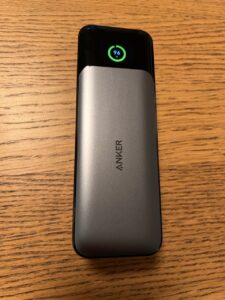
The extra margin also meant I could charge phones and tablets from the same setup. Normally, I would use my FlexSolar 120W panel and Anker C300 DC for those smaller devices. With the F360 feeding the AC180, I did not have to be as strict about keeping the two systems separate.
Real-world output in sun, haze, and clouds
Under absolutely perfect conditions, I saw around 300 to 310W going into the AC180.
Most of the time in good weather, output was above 250W. That is the range that mattered most during the camping trips, because it was enough to recover the AC180 quickly while the cooler and Starlink remained online.
The weather during most of my use was very good, so I do not want to turn the poorer-weather numbers into a broad benchmark. Still, I did get enough changing conditions to see how the panel behaved.
In light haze, I saw roughly 150W. Under more ordinary cloudy conditions, output could fall to around 50 to 60W.
That cloudy output was obviously much lower, but it was still useful. With the Starlink Mini and cooler running, the panel could cover enough of the load to keep the setup going and still add a few percentage points to the AC180.
That impressed me. I expected a drop when the sky became poor, but the panel remained more productive than I expected.
It also recovered cleanly when the sunlight returned. I did not need to unplug anything, restart the AC180, or reset the connection. The whole system worked flawlessly in that respect.
Heat and the normal solar-panel output drop
The F360 did become hot in strong sunlight, and output dropped somewhat as it warmed up.
I did not measure that closely enough to give a precise number. My rough impression was a drop of perhaps 20 to 30W, but I would treat that as an estimate rather than a tested result.
Nothing about the behavior seemed unusual to me. Solar panels lose some output as they get hot, and the F360 behaved much like I would expect. It did not turn a good charging day into a bad one, and it did not change my overall view of the panel.
Positioning it during the day
I repositioned the F360 around three times per day.
My approach was to aim it a little ahead of the sun. That way, after around 30 to 60 minutes, the sun would move into a more direct position and the panel would receive full sunlight.
This worked well and meant I did not have to adjust it constantly. Three positioning changes over a day felt reasonable for the amount of power I was getting back.
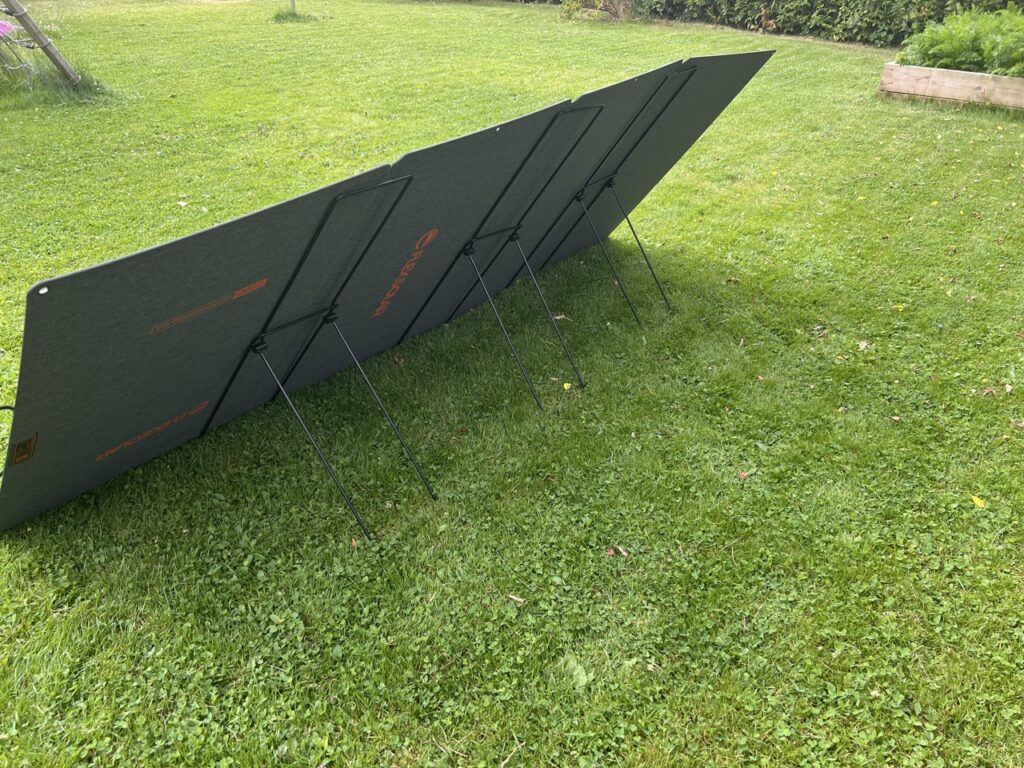
The separate kickstands also made it easy to change the angle. They are not built into the panel itself. Instead, the F360 rests on three individual stands.
The separate kickstands and my tent-peg workaround
The three kickstands worked well at both campsites, but I had already noticed during my home test that they could slide slightly at certain angles.
My solution was simple: I placed tent pegs in the ground as stoppers.
The pegs were not attached to the stands and were not gripping them. They simply stopped the stands from sliding farther across the ground. That small workaround made the setup feel secure.
The panel also encountered wind during my camping use and remained stable. Its weight helped a lot. At 14.5 kg, it has enough mass that it does not feel eager to move once it is properly set up. I did not need ropes or any additional securing beyond the pegs acting as stoppers.
Rain, dew, and outdoor use
During the camping trips, the F360 encountered rain, morning dew, and wind, and I did not have any problems.
I want to keep that claim within the limits of what I actually did. This was not a controlled waterproofing test, and one month is not long enough for me to make a durability claim about years of exposure.
What I can say is that ordinary camping weather did not interrupt charging or give me any reason to worry about the panel. It continued working normally, and nothing about the cables, surface, folds, or stands appeared affected afterward.
Setup and pack-down
Despite the size, the F360 is easy to set up.
It takes me only a few minutes to remove it from the case, unfold it, position the three stands, and place the tent pegs. Putting it away is equally straightforward and takes about the same amount of time.
The panel folds back into its carrying case without a struggle. That matters because large gear becomes irritating quickly if packing it away feels like a puzzle. The F360 has not had that problem.
After the camping trips, mine still looked new. I try to take good care of my equipment, so this is not a rough-treatment durability test. Still, I have seen no wear, damage, loose parts, cable issues, or problems with the carrying case.
My build-quality impression is very positive. It feels solid and well made, much like my other FlexSolar panels.
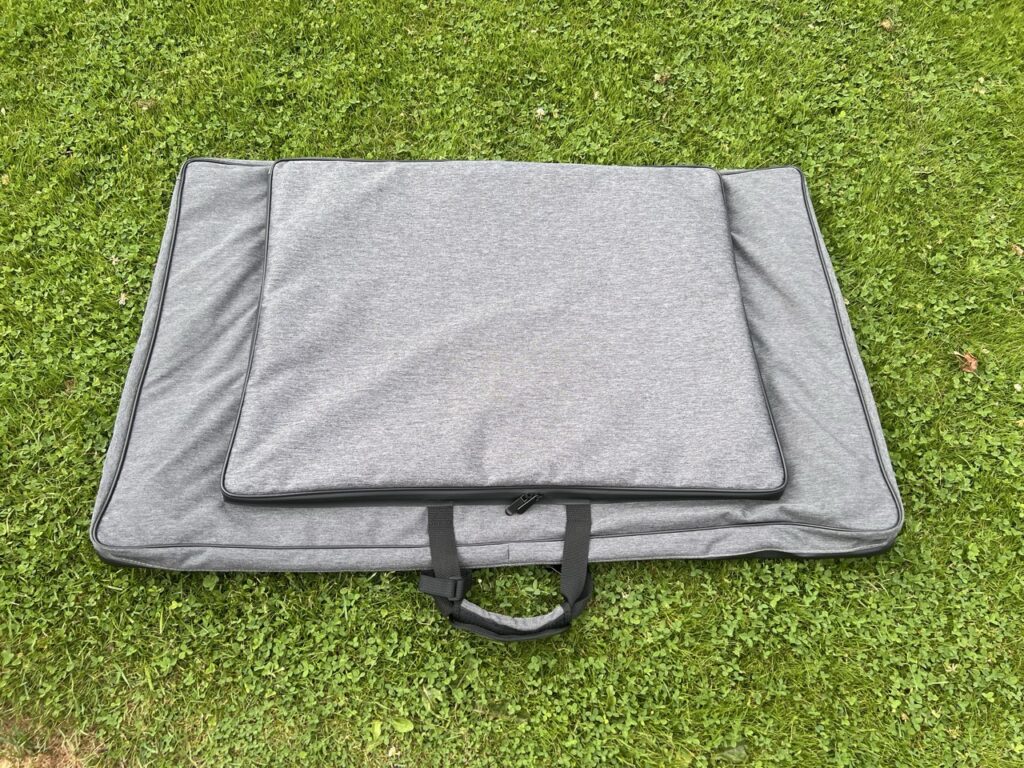
Portability: heavy, but completely manageable for my use
At 14.5 kg, the F360 is heavy. It feels like a substantial piece of equipment, because that is what it is.
For me, though, the weight is an expected tradeoff for its size, output, and build quality, not a surprising product flaw.
I am a large person and can handle it fairly easily over short distances. The included case is also very good and has a useful carrying handle. I never had to carry it far during these trips because we park close to where we sleep.
For transport, I put it in the roof box of the car. I never hesitated to bring it when car camping.
That is the important boundary. I find it portable within a car-camping setup, but I would not call it broadly portable in the way a smaller panel is. It belongs in a car, roof box, cabin, garage, or base camp. It does not belong in a hiking pack.
F360 vs BLUETTI MP200: speed or space
The biggest difference between the F360 and my BLUETTI MP200 is charging speed.
The MP200 could help recover the AC180, but it struggled more when the power station was also supporting my normal loads. The F360 really shines in that situation. It gives me enough input that I can leave Starlink running continuously and still expect a fast recovery in decent sun.
That does not mean the MP200 has become useless to me.
I will probably still use the MP200 with the AC180 when I need to conserve space in the car. It is smaller and easier to fit into a crowded loadout.
But when I have room, I will always try to bring the F360 instead. The extra charging speed changes the way I use power enough that the larger panel is worth it.
When I would choose the FlexSolar 120W instead
The FlexSolar 120W still makes much more sense for smaller trips.
Sometimes it is only me and my wife hiking for one night. If I do not need the compressor cooler and mainly want to run the Starlink Mini, the FlexSolar 120W and Anker C300 DC are enough.
That setup is smaller and more appropriate for the job. Bringing a 14.5 kg panel would make little sense when my actual power needs are modest.
That comparison gives the F360 a clear place in my gear:
- FlexSolar 120W and Anker C300 DC for lighter one-night trips without the cooler
- BLUETTI MP200 and AC180 when I need to save space in the car
- FlexSolar F360 and AC180 when I want maximum charging headroom for the cooler, Starlink, and other devices
Who I think the FlexSolar F360 is for
Based on my use, I think the F360 is mainly for car campers.
It makes sense if you:
- use a larger power station such as the BLUETTI AC180
- run ongoing loads like a compressor cooler and Starlink Mini
- want to recover meaningful overnight battery use in a few hours of direct sun
- have room in a car, roof box, cabin, or base-camp setup
- value charging speed more than low weight
- want useful output even when the sky is not perfect
I also expect it to be useful for cabin use and home power outages. I have already used it successfully at a cabin while camping, but I have not yet had to depend on it during a real home outage.
Who should choose a smaller panel
I would choose something smaller if:
- you do not need this much power
- you mainly charge phones, tablets, or a smaller battery
- you need a panel that is much lighter
- storage space in the vehicle matters more than charging speed
- you need to carry your solar setup any meaningful distance
- your trips look more like a one-night hike than a car-based camp
The F360 is not a universal portable panel. It is a large folding panel that happens to be manageable when transport is built around a car.
Value and final verdict
I paid 2,300 SEK for the FlexSolar F360, and after using it at camp, I still think that was very good value.
The charging speed is the main reason. Taking my AC180 from around 50 to 60% in the morning back to full in about two to three hours of direct sunlight, while it continued running a Starlink Mini and compressor cooler, is exactly the kind of result I wanted.
The panel has also been easy to live with. Setup takes only a few minutes. The kickstands work well once I stop them sliding with tent pegs. The carrying case is excellent. It handled rain, dew, and wind without a problem in my use. And after the first month, it still feels solid and looks like new.
There are limits, but they are easy to understand. It is heavy and takes up space. Those are expected tradeoffs for a panel of this size, output, and build quality.
For car camping, I would give the FlexSolar F360 a strong 5 out of 5.
I would definitely buy it again.
The clearest way I can describe its value is that it lets me spend power instead of worrying about every bit of consumption. The MP200 could keep the AC180 going, but the F360 gives me enough charging headroom that the whole camp power system feels relaxed.
If I need to conserve space, I will still bring the MP200. If I only need Starlink for a short one-night trip, I will bring the FlexSolar 120W and Anker C300 DC. But when I am car camping with the cooler and Starlink running around the clock, I will always try to make room for the F360.
FlexSolar F360
A large and powerful folding solar panel that can recharge a BLUETTI AC180 from around 50 to 60% to full in two to three hours of direct sun while it continues running a Starlink Mini and compressor cooler. It is heavy and takes up space, but for car camping the charging headroom is excellent.
Pros
- Fast AC180 recovery while normal camp loads remain connected
- Usually delivers more than 250W in good usable sun
- Still provides useful power in haze and cloudy weather
- Easy setup and pack-down despite its size
- Solid build quality and a very good carrying case
- Stayed stable and worked reliably through wind, rain, and morning dew
Cons
- Heavy at 14.5 kg
- Takes up substantial storage space
- Separate kickstands can slide without simple stoppers
- Needs repositioning during the day for the best output
- Far too large and heavy for hiking
Best for
Car campers, cabin users, home-backup setups, and anyone charging a larger power station while running ongoing loads such as a compressor cooler and Starlink Mini.
Not for
Hikers, people with limited vehicle storage, light power users, or anyone better served by a smaller and easier-to-carry solar panel.